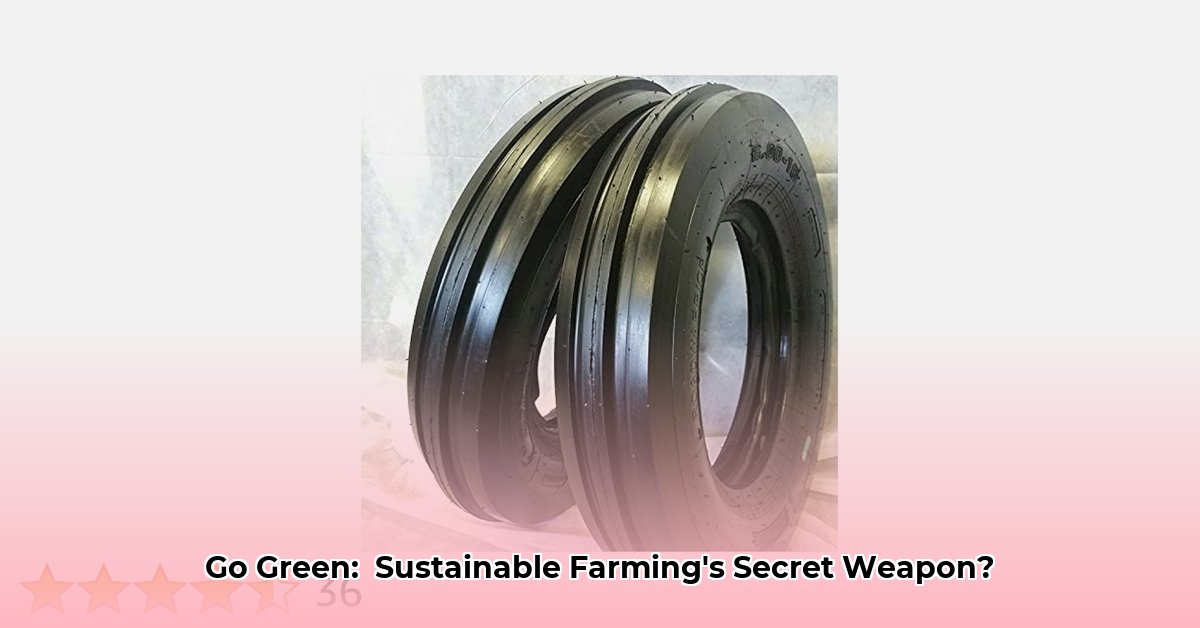
5.50-16 Tractor Tires: Minimizing Soil Compaction for Sustainable Agriculture
Tractor tires are more than just rubber; they're a critical component of sustainable farming practices. The choice of tire, particularly the size and its impact on soil compaction, directly affects crop yields, resource usage, and the long-term health of your land. This guide focuses on 5.50-16 tractor tires, exploring their role in sustainable agriculture and providing actionable steps for their effective use and maintenance. Did you know that improper tire inflation alone can significantly reduce your yields? For more on larger tires, check out 7-16 tire info.
Understanding Soil Compaction: A Silent Threat to Sustainability
Soil compaction, caused by the weight of heavy machinery like tractors, reduces water infiltration, restricts root growth, and lowers crop yields. This leads to decreased efficiency, increased fertilizer use, and ultimately, an unsustainable farming practice. "Soil compaction is the silent thief of harvests," says Dr. Emily Carter, Soil Scientist at the University of California, Davis. It compromises the very foundation of productive agriculture.
The Impact of Tire Choice
The size and type of tractor tires significantly influence soil compaction. 5.50-16 tires, while common, present a balance between practicality and environmental impact. Proper selection, inflation, and maintenance are crucial to minimizing their negative effects.
Selecting and Utilizing 5.50-16 Tractor Tires for Sustainable Practices
Choosing the right 5.50-16 tire isn't merely a matter of cost; it's a crucial decision that impacts the long-term success and sustainability of your operation.
A Step-by-Step Guide:
- Assess Your Soil Type: Sandy soils require different tire characteristics than clay soils, affecting traction, compaction, and overall performance.
- Analyze Your Farming Practices: The types of tasks you perform (tilling, planting, harvesting) necessitate specific tread patterns and tire constructions for optimal efficiency and minimal soil disturbance.
- Master Tire Inflation: This is paramount. Proper inflation is the single most influential factor in reducing soil compaction. Underinflation significantly increases compaction. Overinflation can lead to tire damage and uneven wear. Regularly monitor and adjust pressure using a reliable gauge. Consider investing in a Central Tire Inflation System (CTIS) for automated pressure management. A study by Purdue University demonstrated a 15% reduction in soil compaction with precise inflation management.
- Explore Advanced Tire Technologies: Consider tires designed for reduced compaction, such as those with Increased Flexion (IF) or Very High Flexion (VF) capabilities. These technologies allow for lower inflation pressures while maintaining load capacity, significantly minimizing ground pressure.
- Prioritize Tire Longevity: Invest in durable, high-quality tires to minimize replacements, reducing waste and lowering your environmental footprint. Proper maintenance extends tire life considerably.
Tire Maintenance: A Cornerstone of Sustainable Farming
Regular maintenance maximizes tire lifespan and minimizes environmental impact. These practices are crucial for overall efficiency and sustainability.
- Regular Inspections: Conduct routine visual inspections for cuts, bulges, or uneven wear. Addressing minor issues promptly prevents larger, more costly problems.
- Consistent Inflation Monitoring: Maintain the recommended tire pressure at all times. Consistent inflation is key for minimizing soil compaction and maximizing fuel efficiency.
- Tire Rotation: Regularly rotate your tires to distribute wear evenly, extending their lifespan. Uneven wear accelerates deterioration and reduces efficiency.
- Appropriate Storage: Properly store your tires during the off-season (protected from sunlight and extremes of temperature) to preserve their condition and extend their useful life.
Long-Term Sustainability Strategies
Sustainable farming goes beyond individual practices. Integrating holistic strategies improves soil health and enhances environmental responsibility.
- Precision Farming: Employ technologies like GPS and variable-rate application to optimize resource use and minimize field traversals, reducing soil compaction.
- Tire Pressure Monitoring Systems: Invest in real-time monitoring systems to ensure optimal pressure across various field conditions and tasks.
- Responsible Tire Disposal: When tires reach their end-of-life, ensure responsible disposal through recycling programs to reduce landfill waste.
Weighing the Benefits: 5.50-16 Tires in Perspective
| Feature | Pros | Cons |
|---|---|---|
| Soil Compaction | Reduced compaction compared to larger tires, if properly inflated. | Still prone to compaction with insufficient pressure or poor management. |
| Fuel Efficiency | Potential for improved fuel economy due to reduced rolling resistance. | Efficiency can be surpassed by specialized low-profile options. |
| Cost | Generally lower initial cost than larger or specialized tires. | May have shorter lifespan requiring more frequent replacements. |
| Availability | Widely accessible from various farm equipment suppliers. | Specialized features (e.g., tread patterns) might be limited. |
Key Takeaways:
- Lower tire pressure significantly reduces soil compaction.
- Advanced tire technologies (IF, VF, LSW) enhance performance by allowing lower pressure operation without compromising load-bearing capacity.
- Careful tire selection depends on your tractor, farming tasks, and soil type.
- Central Tire Inflation Systems (CTIS) optimize pressure for diverse operating conditions.
By thoughtfully selecting, using, and maintaining 5.50-16 tractor tires and implementing sustainable farming techniques, you can significantly reduce your farm's environmental impact while boosting efficiency and profitability. Remember that sustainable agriculture is an ongoing journey of continuous improvement and adaptation.